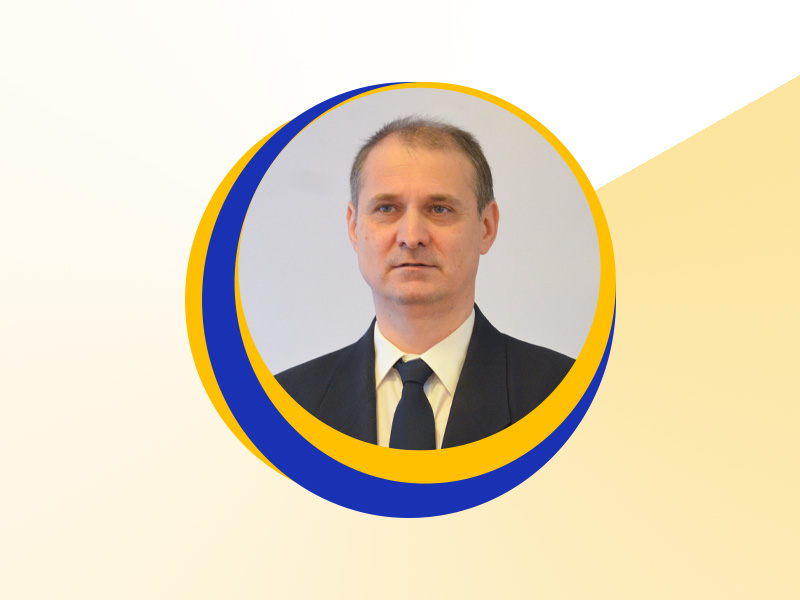
AstroTeach had the honor of speaking with Professor
István Horváth on November 6, 2025, in a deeply insightful
conversation exploring the mysteries of gamma-ray bursts, the structure of the
Universe, and the frontiers of modern astrophysics and cosmology.
Professor Horváth is a distinguished astrophysicist best
known for his pioneering research on gamma-ray bursts (GRBs) and
the large-scale structure of the cosmos. His influential work on
the classification of GRBs and the discovery of potential large-scale
cosmic structures—including claims suggesting patterns beyond the expected
uniformity of the Universe—sparked major scientific discussion and contributed
to one of the most fascinating debates in contemporary cosmology.
He serves as a professor at the National University
of Public Service (NUPS) in Budapest, Hungary, where he leads research
and inspires the next generation of scientists. His publications have appeared
in leading astrophysical journals, and his contributions have helped shape our
understanding of some of the most energetic and distant phenomena in the
Universe.
In our conversation, Professor Horváth reflects on his
scientific journey, the challenge and excitement of studying the deep cosmos,
the evolving landscape of cosmological discoveries, and his perspective on
curiosity, scientific integrity, and the importance of open-minded inquiry in
astrophysics.
We are grateful for his time and generosity in sharing his
knowledge with the AstroTeach community.
Firstly, I would like to thank you for the kind invitation.
Secondly, I want to point it out that AI, artificial
intelligence, became more and more important in everybody’s life. One cannot
underestimate the importance of the AI in the following years. Therefore, I’ll
come back the AI during the interview.
For demonstrate I will answer question 2 and 4 with an
audio. One is recorded the other one is created by AI.
My name is Istvan Horvath. I am a physicist and an
astronomer. I was born and raised in Debrecen, the second largest city in
Hungary. As a child, I was fascinated by the night sky.
I was 6 years old when the Moon landing happened. Many times
in the playground we imagined there is a spaceship there and played that we are
astronauts. Behind the iron curtain we didn't know Star Trek. But we had a
German series Spaceship Orion. So, I dreamed of being an astronaut. But I
thought let’s be an astronomer first. Or just an amateur astronomer.
As I said, I was fascinated by the night sky. I could only
see the beautiful night sky just a several times a year, because from a city of
200,000 people, only the brighter stars were visible. But luckily my
grandparents lived in a village and in the 70s the street lighting wasn't very
bright. The backyard away from the street was excellent for observation.
Every September there was an astronomy week in the city. I
listened to the lectures, then later I went to the astronomy club every week.
One could borrow binoculars and a 6-centimeter telescope from the club. So, I
admire the Milky Way and watched the deep-sky objects like globular clusters,
galaxies and so on. I also observed variable stars and sent my observations to
the Hungarian association and also to the AAVSO, the American Association of
Variable Star Observers. However, during my university studies I had less time
for observations, so I became a professional astronomer. But I still look for
opportunities to watch the sky when I get to an area with less light pollution.
2, Have you had any teachers or mentors who inspired you,
and what did you learn from them?
Many of my teachers taught me lot’s of thing, including
humbleness. I remember when we studied calculus I said to my high school math
teacher, János Mucsa, we are smarter than Galilei. He did not agree. Then I
said we know more than Galilei. He did not agree. Finally, all I could say was;
there is one thing which we know and Galilei did not.
Later, I have been very fortunate to learn from several
remarkable scientists who shaped both my professional path and my way of
thinking. During my University study two people stand out in particular:
Professor Béla Lukács and Professor György Paál.
From Béla Lukács, who supervised my diploma and early
research work, I learned the importance of rigor in theoretical physics and the
beauty of Einstein’s general relativity.
György Paál, on the other hand, inspired me with his
creative approach to cosmology. He had an exceptional ability to connect
large-scale observations with theoretical models.
3, Could you tell us about some of the significant projects,
discoveries, or scientific contributions you've been involved in?
I would like to stay a bit with my early years. In the early
90s we have lots of visitors in Budapest. One of them Nándor Balazs, from Stony
Brook University which is in Long Island, was the last assistant of Einstein.
He was a friend of Eugene Wigner the Hungarian Nobel laureate. Not only he had
great ideas, He also told us lots of anecdotes about these famous physicists.
He also worked with Schrödinger in Ireland.
In the early 90s I worked with Béla Lukács on Black Holes.
Some years later with György Paál on Cosmology. That time also a Hungarian born
Peter Mészáros visited our institute and was looking for help for gamma-ray
bursts cosmology. So when I visited Nándor Balazs on Long Island Peter invited
me to visit Penn State, too. A year later I spent a year at Penn State working
on gamma-ray burst cosmology with Peter (Meszaros).
Before my visit, Zsolt Bagoly had spent 2 years in Penn
State. Also another native Hungarian from Prague, Attila visited Peter twice.
During my stay at Penn State Peter invited Lajos Balazs, the director of the
Hungarian Konkoly Observatory to work with us. Therefore, Peter was the founder
of our High Energy Astronomy Research Team (HEART). These 5 people were the
core of our research group. The next 3 decades we published more than hundred
scientific papers together, mostly on gamma-ray bursts and received several
research grants.
For a long time, gamma-ray bursts (GRBs) were believed to
fall into two main categories: short and long bursts,
primarily distinguished by their duration. However, as I was analyzing the
large BATSE dataset from the Compton Gamma Ray Observatory in the late 90s, I
noticed that the distribution of burst durations was not bimodal. Instead,
there seemed to be an intermediate group — bursts lasting roughly
between two and ten seconds — forming a distinct peak in the duration
distribution.
To explore this, I performed, statistical tests whether two
or three log-normal components best described the observed data. The results
consistently favored three classes. This led to the hypothesis that a third
type of gamma-ray burst might exist, possibly representing a different
kind of progenitor or emission mechanism.
In the standard picture, short gamma-ray bursts are
typically associated with the merger of two compact objects, such as neutron
stars or a neutron star and a black hole. These cataclysmic events release
enormous energy in a fraction of a second and, as we now know, also produce
gravitational waves — a fact spectacularly confirmed by the joint detection of
GW170817 and its gamma-ray burst counterpart.
Long GRBs, by contrast, are believed to result from the
collapse of massive stars, so-called collapsar or hypernova, where a newly
formed black hole drives powerful relativistic jets through the dying star’s
envelope.
The intermediate gamma-ray bursts — the third class we
proposed — remain a subject of debate, but several models have been suggested.
Some researchers argue that they may come from magnetar-powered explosions,
partially failed jets, or mergers occurring in dense stellar environments,
where the duration and spectral characteristics fall between the canonical
short and long populations. Understanding these progenitors is essential,
because they connect gamma-ray bursts not only to stellar evolution but also to
the formation of black holes and neutron stars — the “endpoints” of stellar
life.
The intermediate class idea initially sparked some debate,
as it challenged the traditional two-class paradigm that had been widely
accepted. However, over time, independent studies using data from other
satellites also found evidence supporting this third, intermediate class.
Today, while the physical interpretation is still discussed, the statistical
reality of a three-group structure is recognized in the literature.
One puzzling pattern is the anisotropy that
sometimes appears in the angular distribution of GRBs when large datasets are
examined. Although the overall distribution is isotropic, subtle clustering
effects may hint at underlying cosmic structures or selection biases.
In our first work on this we also found the GRBs sky
distribution isotropic. Lajos Balázs was who pointed out, that although the
short GRBs’ sky distribution showed no deviation from the isotropic
distribution, so as the long ones, to compare the short and long GRBs
distribution the two burst populations sky distribution statistically differ
from each other.
This is how we started to analyzing the angular distribution
of the GRBs.
Indeed, the discovery of the Hercules–Corona Borealis Great
Wall is one of the most intriguing outcomes of gamma-ray burst studies. More
than a decade ago we started to work with professor Jon Hakkila, who now is an
Associate provost at University of Alabama in Huntsville. Around 2013, our
analysis of GRB spatial distributions revealed an unexpected clustering of
bursts in a particular region of the sky, corresponding to redshifts around 2.
When interpreted cosmologically, this cluster appeared to trace a structure
spanning nearly 10 billion light-years — making it one of the largest known
features in the observable Universe.
What makes this so fascinating is that such a size seems to
exceed the limits predicted by the cosmological principle, which assumes that
the Universe is homogeneous and isotropic on sufficiently large scales. The
Great Wall does not necessarily invalidate that principle, but it invites us to
refine it — perhaps the transition to large-scale uniformity happens at greater
distances than we previously thought, or maybe GRBs trace a particular type of
matter distribution not perfectly aligned with galaxies.
The scientific community’s response has been mixed but
constructive. Some colleagues are cautious, suggesting that the pattern might
result from selection effects or incomplete sampling, while others have found
supporting hints in quasar and galaxy surveys. What is clear, however, is that
GRBs have proven to be a valuable new cosmological probe, capable of revealing
structures that traditional surveys might miss.
For me, the deeper message is that the Universe still holds
surprises at every scale. These immense structures remind us that even our most
established cosmological assumptions must continually be tested against
observation.
That is one of the most fundamental challenges in
observational astrophysics — and especially in gamma-ray burst research. GRBs
are detected by a variety of instruments, each with its own sensitivity, energy
range, and sky coverage, which inevitably introduce biases. Distinguishing real
cosmic structures from instrumental artifacts therefore requires both
statistical rigor and caution.
In my work, I always begin by testing the robustness of a
pattern using multiple, independent datasets — for example, comparing BATSE
results with those from Swift or Fermi. If a structure or correlation persists
across instruments with different selection functions, that increases our
confidence that it reflects a real astrophysical phenomenon rather than an
observational artifact.
We also perform Monte Carlo simulations to model how a truly
random, isotropic distribution of bursts would appear given each detector’s
limitations. By comparing those synthetic distributions to the observed data,
we can quantify how likely it is that a given pattern arises purely from
selection effects.
Another important step is blind statistical testing —
analyzing the data without prior assumptions about where a structure “should”
appear. This minimizes subconscious bias and helps ensure that our conclusions
are data-driven.
Ultimately, it’s a balance between skepticism and curiosity.
We must be open to unexpected patterns — like the possible large-scale
structures we’ve discussed — while maintaining a critical awareness that our
instruments, and even our methods, shape what we see. True progress in
astrophysics often comes from understanding both the Universe and the tools
through which we observe it.
Missions like these have fundamentally transformed our
understanding of gamma-ray bursts. Before these satellites, GRB observations
were limited and often inconsistent, making it difficult to identify
statistical patterns or understand their true nature.
BATSE, aboard the Compton Gamma Ray Observatory, provided
the first large, uniform dataset of GRBs, allowing us to recognize their
isotropic distribution and identify hints of a possible third class of bursts.
This marked a turning point, moving GRB research from isolated detections to
systematic, population-level studies.
The BeppoSAX satellite enabled the discovery of afterglows
in X-rays and optical wavelengths, connecting GRBs to host galaxies and
confirming their extragalactic origin. Following this, Swift added rapid
localization capabilities, allowing astronomers worldwide to observe afterglows
within minutes, and providing a wealth of multi-wavelength data.
Fermi expanded our view further by observing GRBs at the
highest energies, revealing the complexity of prompt emission and energy
spectra. The combination of these missions has allowed us not only to refine
GRB classifications but also to study their physical mechanisms, environments,
and cosmological implications.
In short, these missions turned GRBs from mysterious,
sporadic flashes into a rich, multi-dimensional field of research — one where
statistical analysis, theoretical modeling, and coordinated observations work
together to unlock the secrets of the most energetic events in the Universe.
Statistical analysis is central to modern astrophysics,
especially when studying gamma-ray bursts. These events are rare, highly
variable, and often observed under different instruments, therefore careful
analysis is crucial to distinguish real cosmic patterns from noise or selection
effects.
My approach typically involves several steps. First, I
ensure that the dataset is as complete and homogeneous as possible, correcting
for known observational biases from each instrument. Then, I apply multivariate
statistical techniques, such as clustering algorithms, principal component
analysis, and likelihood modeling, to identify structures or correlations that
are not immediately obvious.
I also rely heavily on Monte Carlo simulations and synthetic
data generation. By comparing observations to randomized datasets that mimic
the instrument’s sensitivity and selection effects, we can quantify how likely
it is that a pattern is genuine rather than a statistical fluctuation.
Finally, collaboration with colleagues is essential.
Interpreting patterns requires both statistical rigor and physical insight, and
discussing results with experts in theory, instrumentation, and observation
helps ensure that our conclusions are robust.
For the last decade we developed collaboration with the
Rényi Mathematical institute, especially with professor Tusnády, who is expert
in statistics.
For me, the thrill lies in discovering subtle trends in
massive datasets — patterns that can reveal new astrophysical processes or even
challenge our understanding of the cosmos itself.
10, Has there ever been a moment when a surprising or
contradictory result changed the direction of your research?
Yes. In 1990 the so-called pencil-beam survey was published
in the Nature magazine. That was the deepest galaxy survey that time. It goes
to 5 billion light-years. It was the second suggestion that galaxy clusters not
the biggest structures in the Universe. There were 15-20 galaxies forming 3-4
groups and between them there were practically no galaxy.
Béla Lukács and I discussed that with György Paál and we
published 3 papers. In these paper we ask whether the grouping is quasiperiodic
in space. We got better periodicity with a non zero cosmological constant.
These publications were published years before the supernova surveys.
Our suggested term was 0.67, which is close to the today’s
accepted value.
11, What do you think the next decade holds for GRB studies
— especially with upcoming observatories like the Vera Rubin Observatory,
THESEUS, or SVOM?
The next decade promises to be transformative for GRB
research. With observatories like these, we are entering an era of
unprecedented coverage, sensitivity, and coordination across wavelengths.
THESEUS and SVOM will detect bursts with improved localization and spectral
resolution, expanding our ability to study faint or high-redshift events.
Meanwhile, Vera Rubin’s wide-field optical surveys will help identify host
galaxies and afterglows more rapidly, linking GRBs to their environments and
large-scale structures. Combined with multi-messenger observations — from
gravitational waves to neutrinos — these missions will allow us to explore GRB
progenitors and their role in cosmic evolution in greater detail than ever
before.
Research in the coming decade will focus on the following
areas:
Multi-messenger astronomy:
The biggest breakthrough will be the simultaneous detection
of gamma-ray bursts and gravitational waves. Short GRBs, which are thought to
be produced by the merger of neutron stars, also emit gravitational waves. The
combined study of these two signals (electromagnetic and gravitational) will
open a completely new window on the physics of extremely dense matter and the
formation of heavy elements.
The landmark event GW170817, detected by LIGO and Virgo and
accompanied by GRB 170817A, provided the first direct confirmation that binary
neutron star mergers are indeed the progenitors of short GRBs. This was one of
the most remarkable achievements of modern astrophysics — a true “Rosetta
Stone” moment that linked light and gravity from the same cataclysmic source.
Many scientists hope that future missions will detect many more such events. I
am skeptical, since the GW170817 was the closest gravitational wave detected
and the GRB 170817A was the second closest gamma-ray busts. So, I think we have
a very slim chance to detect another one within years.
Second, Exploring the early Universe:
GRBs are extremely bright, so they can be detected from huge
distances. They can be seen as cosmic “lighthouses” whose light penetrates the
neutral gas that fills the young Universe. By studying the most distant GRBs,
astronomers can gain direct insight into:
The formation of the first stars
and
The birth of the first galaxies,
And the era of reionization, when ultraviolet radiation from
the first stars and galaxies ionized the hydrogen filling the cosmos.
Because long GRBs are associated with the collapse of
massive stars, observing them at high redshifts gives us a unique glimpse into
the deaths of the first stellar generations — effectively connecting gamma-ray
burst astronomy with the history of star formation itself. THESEUS, in
particular, is designed to identify such high-redshift GRBs and analyze their
afterglows to trace the chemical enrichment of the early Universe.
12, What do you believe is the next big challenge or
discovery that astronomers will face in the coming decade?
In the next decade, astronomy will face the enormous
challenge of managing and interpreting an unprecedented flood of data. The Vera
Rubin Observatory alone will generate tens of terabytes of information every
night, revealing millions of transient events across the sky. The real
difficulty will not be in collecting data, but in understanding it —
distinguishing meaningful cosmic signals from noise and instrumental artifacts.
Artificial intelligence and machine learning will become essential tools, capable
of recognizing subtle patterns, classifying events in real time, and uncovering
relationships that would be invisible to traditional analysis. The combination
of massive datasets and intelligent algorithms will open a new era of
discovery, allowing astronomers to explore the cosmos dynamically, almost as it
evolves. In this sense, the biggest challenge — and the greatest opportunity —
will be to teach machines how to see the sky with us.
This data revolution will become even more crucial as we
enter the era of multi-messenger astronomy, where observations from gamma rays,
gravitational waves, neutrinos, and radio signals must be analyzed together.
When detectors like LIGO, Virgo, and KAGRA identify a gravitational-wave signal
from a neutron star merger, telescopes around the world — including those
detecting GRBs — must respond within seconds. Coordinating and interpreting
this deluge of heterogeneous data will be beyond human capacity alone. Here, AI
will play a transformative role: algorithms trained on both simulated and real
events will be able to recognize transient counterparts, predict likely host
galaxies, and prioritize follow-up observations.
Moreover, the use of AI-driven data pipelines will change
how discoveries are made. Instead of humans searching for rare coincidences
between gravitational-wave alerts and gamma-ray bursts, intelligent systems
will continuously scan the sky, learning from every new detection. The next
great discoveries — new classes of transient phenomena or unknown types of
progenitors — may well be first spotted not by an astronomer, but by an
algorithm designed to notice what we might otherwise overlook.
Astronomy, therefore, stands on the threshold of a new
partnership between human curiosity and artificial intelligence — one that will
reshape how we discover and understand the most extreme events in the cosmos.
13, What's the most memorable moment you've had in your
scientific career?
I already mentioned, with György Paal and Béla Lukács we
found it is likely the cosmological constant is non zero. Very surprising.
The most memorable, when I found out the reaction of the
suggestion of the Hercules–Corona Borealis Great Wall. First it appeared in
Wikipedia and later there were a huge media response. Scientific videos came
out saying the biggest structure is in our Universe is the Hercules–Corona
Borealis Great Wall. Journalist ask us several times an interview about it. So
we ask Professor Hakkila, the co-founder of the Great Wall to take the
interviews. He did a very good jobs.
14, If you could recommend a book to anyone, which one would
it be?
There is a BBC program called “Desert Island Discs”, they
ask the guests similar question; to choose a book which they would take with
them to a desert island. Guests are also automatically given the Complete Works
of Shakespeare and the Bible. So I am not starting with the Bible.
However, I have several suggestions:
For non science Tolstoy’s War and peace, which
captures the full spectrum of human experience — from the
intimacy of personal struggle to the vast forces shaping history.
Secondly, the Landau minimum; Landau and Lifshitz,
Theoretical Physics books.
The Landau and Lifshitz, Theoretical Physics series has been
a steady companion throughout my career. These books demand focus and patience,
but they give back much more than they take. Each chapter shows how careful
reasoning and clear mathematics can make even difficult ideas understandable. I
appreciate their precision and simplicity — they never use more words than
necessary, yet every sentence carries weight.
Next is my favorite book on gamma-ray bursts, written by my
friend Bing Zhang. It is both clear and inspiring, combining solid theory with
many examples from real observations. What I like most is that it helps readers
see the connections between different ideas in a simple and honest way. Bing
has a rare talent for explaining difficult topics without making them feel
heavy. Whenever I read his book, I am reminded how much good science depends on
clarity, curiosity, and careful work.
And above all: the Cultural History of Physics, written by
the father of the billionaire Charles Simonyi, Károly Simonyi. It’s a
remarkable book because it connects the development of physics with the broader
history of culture and ideas. Simonyi shows how science has always been part of
human thought, not separate from it. I admire how deeply the book reflects on
both the beauty of physical laws and the people behind them. It reminds me that
science is not only about results, but also about the long, shared journey of
understanding.
This is an amazing book, full of wonder.
Mathematics amazes me. But nowadays one cannot be a
mathematician and an astronomer too, like Gauss.
Therefore I am not doing mathematical research, however I
use lots of maths and many times I have to learn new mathematics which is need
for our research.
But I still thinking about prime numbers. I calculated lots of consecutive prime differences. Sometimes for a two thousand digit primes.
Amazing. Big prime numbers looks like random numbers.
May be in the next decade I’ll have time to work on primes.
What I would tell young scientists is to stay curious and
never stop asking questions. Curiosity is the real engine of science — not
awards, not positions, but the need to understand something that no one has
explained before. Learn as much as you can, both within and beyond your field,
because discoveries often happen where two ideas meet. Be patient: progress in
science takes time, and failures are almost as important as successes. Also,
don’t be afraid of big data or artificial intelligence — these are tools that
will help you see patterns that older generations could only imagine.
Follow your dreams and try to do what you really like to do.
Lastly, find a good mentor. Does your mentor support you and
train you? A head of the department probably would not be the best one.
Cosmic anisotropy.
What continues to amaze me most is the possibility that the
Universe might not be as uniform as we have long assumed. The cosmological
principle says that the Universe is homogeneous and isotropic on large scales.
However, when we make a map of the large scale of the
Universe, using galaxies and galaxy clusters, we always find almost as large
structures as big as our map.
Specially, when we examine the distribution of gamma-ray
bursts we practically see the whole observable Universe. And we found a 10
billion light year big structure.
If these features are real, they challenge one of the most
fundamental assumptions in cosmology. To me, that is both humbling and
thrilling.
18, Is there anything you'd like to discuss that we haven't
covered yet?
Yes. Although we had always been on a good relation with the
Fermi group, many years ago this got even better. Our former student Peter
Veres now lives in Huntsville and works as a part of the Fermi team. So, now we
have closer connection with NASA.
Watch the full conversation below.