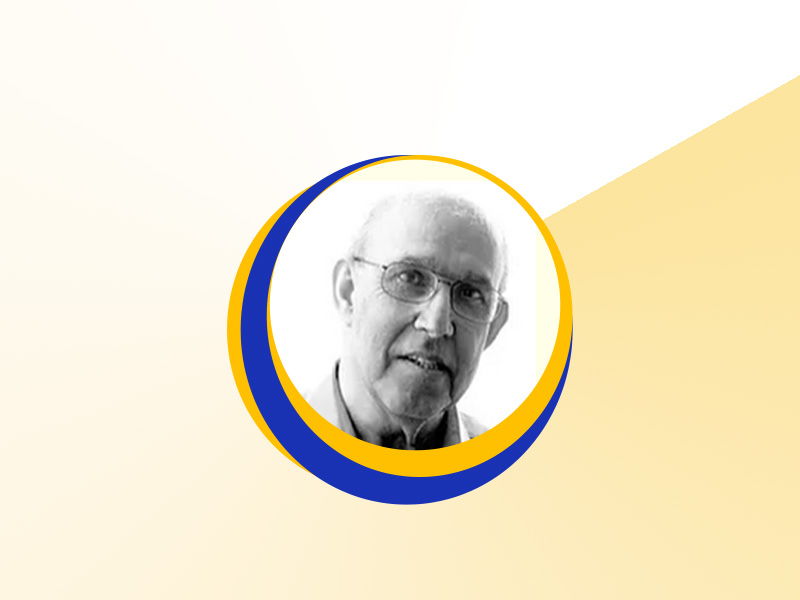
We are honored to present an exclusive interview with Professor Mohammad Jamshidi, a distinguished figure in the field of electrical engineering and systems science.
Emeritus Professor at the University of Texas, Dr. Jamshidi's illustrious career is marked by groundbreaking contributions and unparalleled expertise. After completing his post-doctorate in electrical engineering, he has earned three honorary doctorate degrees in recognition of his significant contributions to the field.
Professor Jamshidi's impact extends beyond academia. With 10 years of consulting experience with NASA, he played a pivotal role in the historic project of launching robots to the surface of Mars, contributing to the advancement of space exploration.
An accomplished author, Dr. Jamshidi has penned 76 books, including 12 widely-used textbooks, and has over 830 published works to his name. His seminal work includes the first textbook on large-scale systems, cementing his reputation as a thought leader and pioneer.
Join us as we delve into the remarkable journey of Professor Mohammad Jamshidi, exploring his insights, experiences, and the legacy he continues to build in the world of science and engineering. This interview was conducted on April 16, 2024.
You can get Professor Jamshidi's gift to the audience, the valuable book "History of Persian Scientists and Poets: 28 Centuries of Contributions" in four languages from the following links:
In English:
https://astroteach.ca/upload/p
In Persian:
https://astroteach.ca/upload/p
In Russian:
https://astroteach.ca/upload/p
In Kazakh:
https://astroteach.ca/upload/p
You can read the previous conversation of Fatemeh Bahrani (Astroteach COO) with prof Jamshidi that was on 8/20/2012, below:
1.
Could
you please introduce yourself and share a bit about your background with us?
I am Mohammad Jamshidi,
born on May 10 1944 in Shiraz, Iran. I finished up to 11th year of schooling in
Shiraz and received my high school diploma from Hadaf # 1 school in Tehran in
1962. I left for the US in January 1963. In the fall of 1971, I returned to
Shiraz and worked at Shiraz University until 1975 when I went to US IBM
Corporation on a 2-year sabbatical leave. In 1977 he returned to Shiraz and in
1979 he returned back to the US.
2.
Could
you tell us about your educational background and where you earned your
degrees?
After graduating from
Hadaf High School in Tehran, I went to US on January 22, 1963. I finished the
BS degree in electrical engineering from Oregon State University in June 196,
Masters in electrical engineering in June 1969 and Ph.D. in electrical engineering
in February 1971, both from the University of Illinois at Champaign-Urbana.
I have also received 3
honorary doctoral degrees from Odlar Yourdu University, (Baku, Azerbaijan,
1999??), University of Waterloo Canada, 2004), and Technical University of
Crete (Greece, 2004).
3.
Can
you share details about your collaboration with NASA? Many Farsi websites refer
to you as the manager of internal programs and the technical control manager of
the NASA space station.
I have been an advisor
(not an employee) of NASA, with 3 years with Jet Propulsion Laboratory as an
advisory scientist for 1st Mars mission (Landed on July 4, 1997), and 7 years
at NASA headquarters on small-large US business relations agreement. I was
never been what the Persian web sites refer to me. This is a false title and
web sites need to correct that.
4.
How
many Iranians are currently working at NASA, and what are their roles and
positions within the organization?
At NASA there are
numerous Iranian scientists and engineers at almost all the NASA Centers,
especially at Jet Propulsion Laboratory (JPL) where over 500 Iranians are
working, including Mr. Babak Ferdowsi, manager of the recent Mars rover which
landed in August 2012. Of course, Dr. Firooz Naderi who managed the previous 2
Mars missions is also a man all Iranians are proud of. Many many more are
there. Another close friend id Dr. Fariborz Hadaegh who is manger of space
navigation and control systems.
5. Beyond your coursework, can you tell us about any research
projects or extracurricular activities at the university?
I have spent 38 of my 41
year post-doctoral career in academic environment. From those years, 7 years at
Shiraz University (1971-1975, 1977-1979), the rest in USA, Denmark, Germany,
Spain, Hong Kong, Iran, Portugal and Australia. I have spent 3 years at such
corporations as IBM, General Motors and Siemens. Over 90% of my contributions
to science and technology has been as an academician: 63 books in print in 6
languages, 48 PhD and 75 MS students graduated around the world, editorship of
6 magazines and journals in Iran, the US, and England. My former students are in
very high technical positions around the world, including those in Iran.
6. Could you please provide an overview of your published
books and notable works, highlighting their significance and impact in your
field?
I have over 650
published works and as I mentioned, 63 of them are books. My 1983 book on
Large-Scale Complex Systems was the first text in that field. This book has
been translated into Chinese, Russian, French and possibly Romanian languages
and has been adopted as a text in all the 5continents in the world. My
work on environmental/economic dispatch of electricity in 1976 while at IBM
Research broke the ground for a balanced approach to energy and environment in
electric power generation.
7. What is System of Systems Engineering (SoSE)? Additionally,
could you please describe your involvement in this field, including the roles
you've held and the activities you've undertaken?
SoSE stands for System
of System Engineering. This is a new engineering field in the world that I and
many others are globalizing it around the world. SoS is a collection of
legacy(regular) independent systems working together for a common cause and
objective. Examples of this technology is iPhone, iPOD, iPAD, smart electric
grid, the internet, etc. I have published the first 2 books in that field and
established the first IEEE (USA’s professional society in electrical
engineering).
8. Could you please elaborate on your additional activities
and notable achievements outside of your primary field or role?
I have traveled to over
106 nations primarily giving keynote speeches on the latest research results of
our (myself and my students) around the world. I have donated over 1000 volumes
of my books to developing and underdeveloped nations through the Science
Academy of Developing Nations (twas.org). Several universities in Iran, for
example, have many of my textbooks and research books in their libraries.
9.
What
are your thoughts on working in Iran? Have you found the experience to be
fulfilling or challenging?
I have always been
willing to help my nation Iran. I have visited over 3 times and have lectured
or conducted a graduate-level course at such universities as Shiraz, Tehran,
Amir Kabir, Sharif, Science and Technology, Tarbiyat Modarres, etc. I have
recently lectured at conferences in Iran via the Internet in real-time.
10.
What
message would you like to convey to your fellow citizens or compatriots?
My humble message to
fellow Iranian scientists, engineers, especially young students is as follows.
Work as hard as you can and always have multiple plans to fulfill your dream.
If Plan A did not work out, do not give up and move on to Plan B and onwards,
and do not quit until you succeed.
11.
Do you
have any final thoughts or messages you'd like to share with the readers?
My last message to
fellow Iranians is to preserve your dignity and make Iran and Iranians proud of
your acts and your behavior not only in Iran but also all over the world.
Thank
you for taking the time to speak with us.